Case study / Product design & UX research
The website was built for browsing. Sales teams needed it to work.
Redesigning Madeval’s bilingual website for product discovery, sales conversations, CRM conversion, and after-sales support.
View live website ↗Turn Madeval’s website into both a customer experience and a practical sales tool, with clearer paths from discovery to appointment and support.
Product Designer and UX Researcher. I led the research and owned the information architecture, user flows, wireframes, and usability testing.
One UI designer and one UX engineer. The UX engineer built the production website.
English and Spanish experiences across products, projects, search, appointments, company content, and after-sales support.
157 quantitative responses, 15 qualitative interviews, three focus groups, executive workshops, feedback sessions, and usability testing.
Launched in October 2025 with CRM-connected appointment and after-sales flows. Showroom teams responded positively; verified conversion metrics are not yet available.
01 / Context
A website for two audiences.
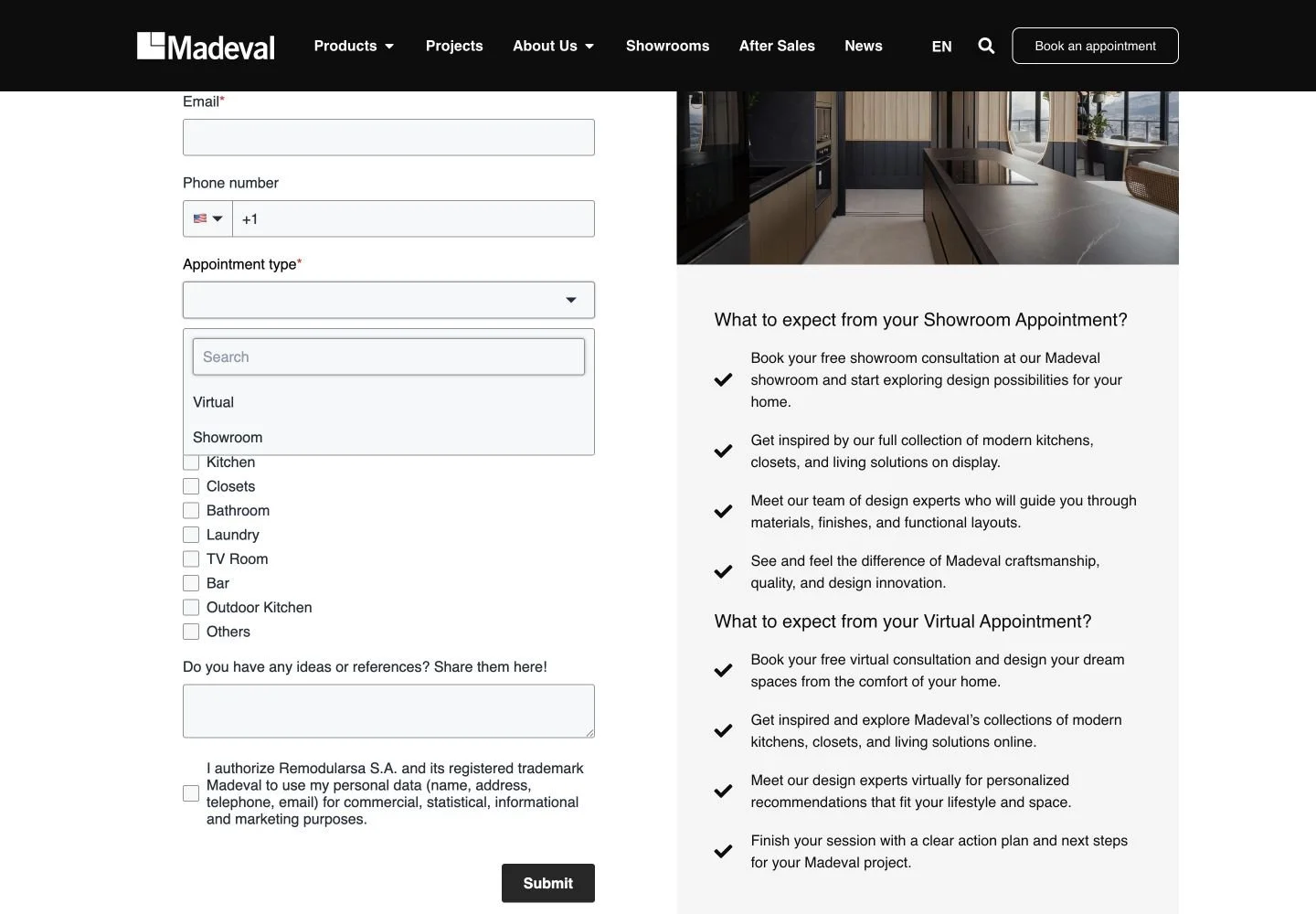
Customers used madeval.com to explore products and projects. Showroom sales teams used the same website during client meetings, where finding the right material, system, or comparable project quickly mattered.
The redesign needed to support both audiences and create a clearer path from discovery into sales and service.
02 / Research
I widened the brief beyond executive assumptions.
The project began with workshops involving Madeval’s executive team. I then conducted research across the organization to understand how the website needed to work in practice.
- 157 quantitative responses from Madeval teams across its locations
- 15 qualitative interviews with distributor owners
- Three focus groups
- Usability testing with showroom teams, clients, and other users
- Feedback sessions with marketing, sales, and design
03 / What the evidence changed
Three needs shaped the product direction.
A sales tool, not only a brand site
Showroom teams needed to find and present relevant products and projects while meeting with customers.
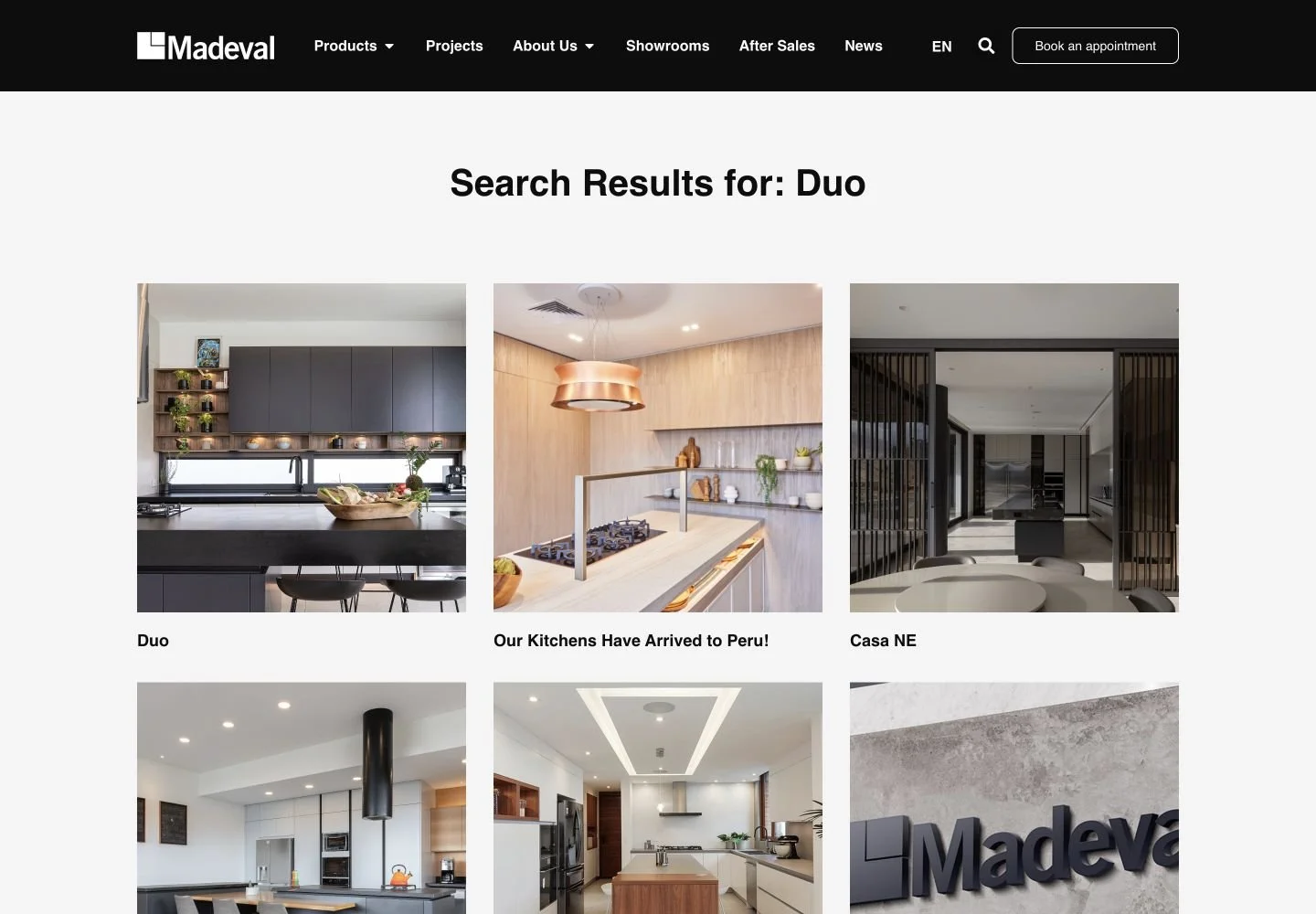
Search was essential
Finding a project with a specific material or Madeval system needed to be fast and direct.
Interest needed a next step
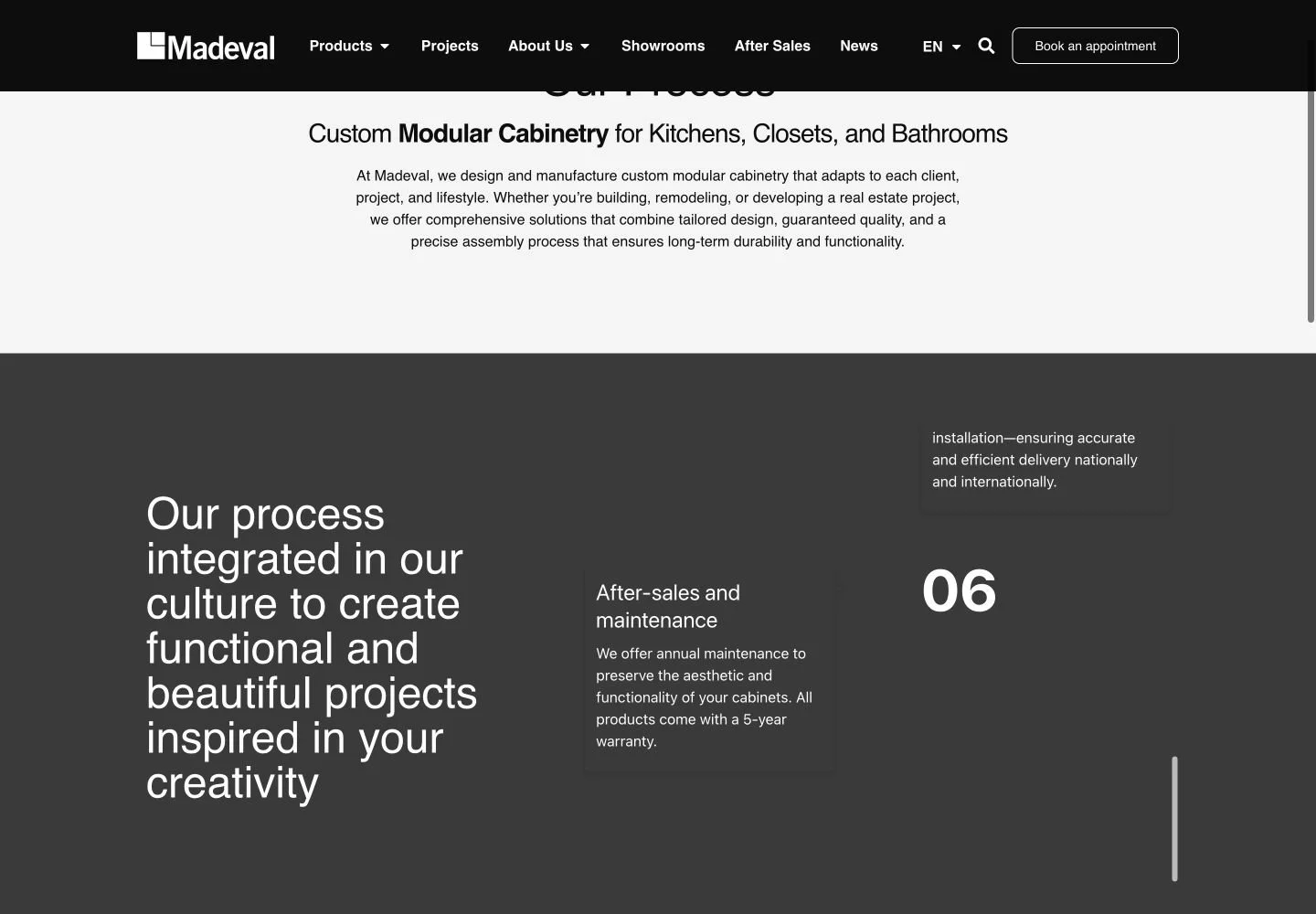
Without appointment booking, customers could explore the website without entering a clear sales conversation.
04 / Architecture
I designed the path from discovery to service.
I translated the research into the information architecture, user flows, and wireframes for the redesigned experience.
The website needed to support the customer before, during, and after the sale.
05 / What we shipped
One website, connected across the journey.
- Cross-site search. Products, projects, collections, materials, systems, locations, and related content can be found without navigating the full site.
- Product and project discovery. Reorganized categories and project filters support customers and sales teams finding relevant references.
- Appointment conversion. Customers can choose a virtual consultation or an in-person showroom appointment. Submissions enter the CRM lead funnel.
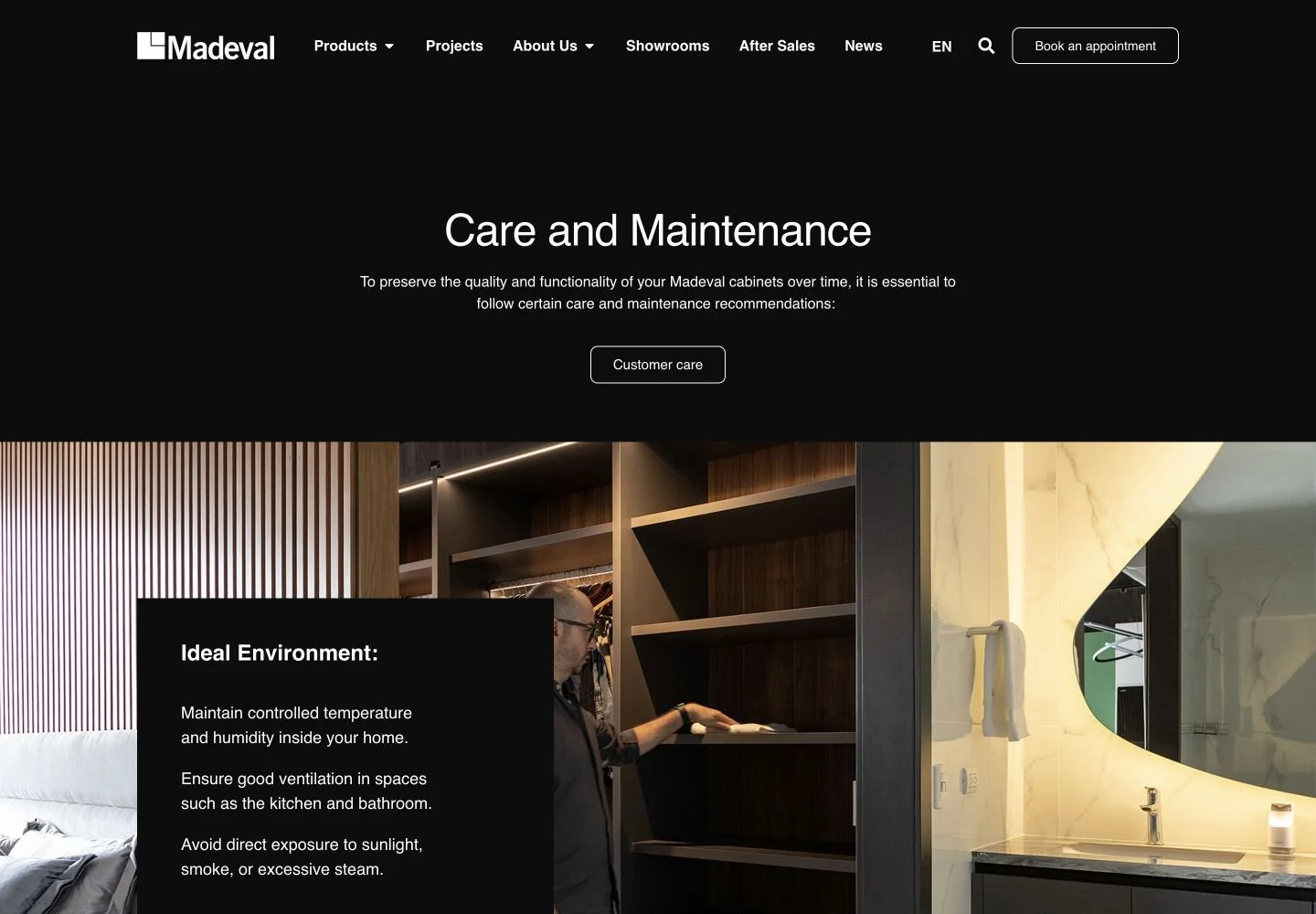
- After-sales support. Care guidance, warranty information, FAQs, and assistance requests extend the experience beyond installation. Requests also connect to the CRM.
- Company story and process. Expanded history and process pages explain Madeval’s background and customer journey.
- Bilingual experience. The final website supports English and Spanish audiences.

06 / Design and implementation
The interface came after the system.
After the architecture, features, and flows were approved, I worked with the UI designer and UX engineer through feedback sessions with marketing, sales, and design.
I continued usability testing and refinement while the UX engineer built the website. I also gathered updated imagery from Madeval showrooms for the new experience.
07 / Outcome
The website now supports the conversation before, during, and after the sale.
Discovery becomes a conversation
Customers can move from exploration into virtual or showroom appointments, with inquiries entering the CRM lead funnel.
Sales teams can find the right reference
Products, systems, materials, and relevant projects are easier to surface during client meetings.
Service continues after installation
Existing customers can submit CRM-connected after-sales requests. Showroom teams responded positively to the redesigned experience.
Verified conversion metrics are not yet available, so the impact is presented through the launched capabilities and internal response rather than numerical claims.
08 / Reflection
The redesign was not only about how the website looked.
The larger shift was from treating the website as a digital catalog to treating it as part of Madeval’s sales and service system.
There is no reliable visual record of the previous website, so this case study focuses on the research, decisions, and live experience rather than creating an artificial before-and-after comparison.